What We Explore
The Mysteries
The questions archaeology still argues over — and the sites where you can weigh them yourself.
Our Approach
Evidence first. Wonder always.
We don't sell you a single answer. On every expedition we lay out what the archaeological record shows, what the alternative theories claim, and where the genuine unknowns lie — then give you the access and the time to make up your own mind.
The Desert Canvas
The Nazca Lines
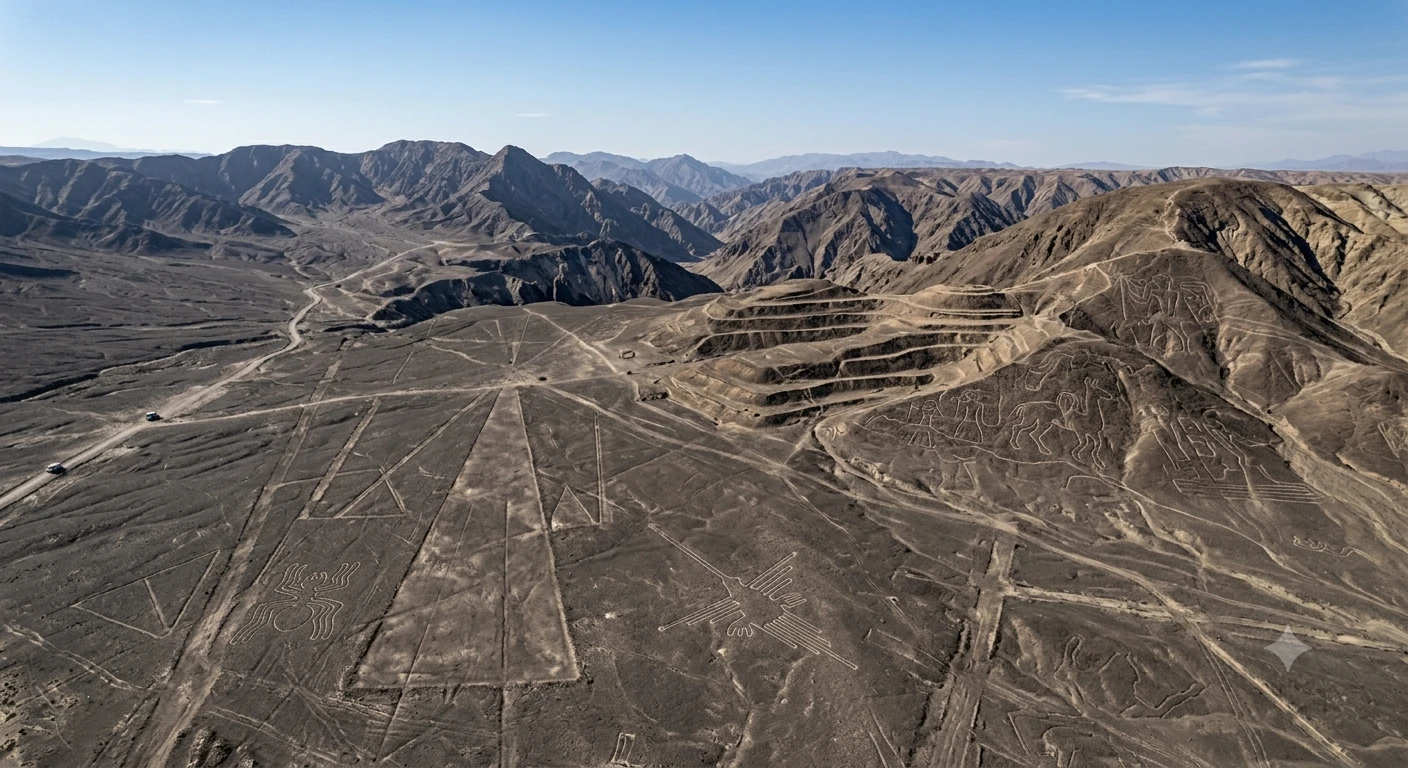
Over 800 geoglyphs — animals, plants and dead-straight lines running for kilometres — etched into the Peruvian desert between 500 BCE and 500 CE. Fully legible only from the air, they raise a question that no single theory has closed: who were they made for, and how did a culture without flight compose them so precisely?
The Skulls
Paracas Elongated Skulls
The Paracas necropolis yielded hundreds of dramatically elongated skulls. Mainstream archaeology reads them as deliberate cranial deformation; others point to cranial volume and features they argue deformation alone can't explain. We show you the evidence and the debate — and let you decide.
The Stones
Impossible Megaliths
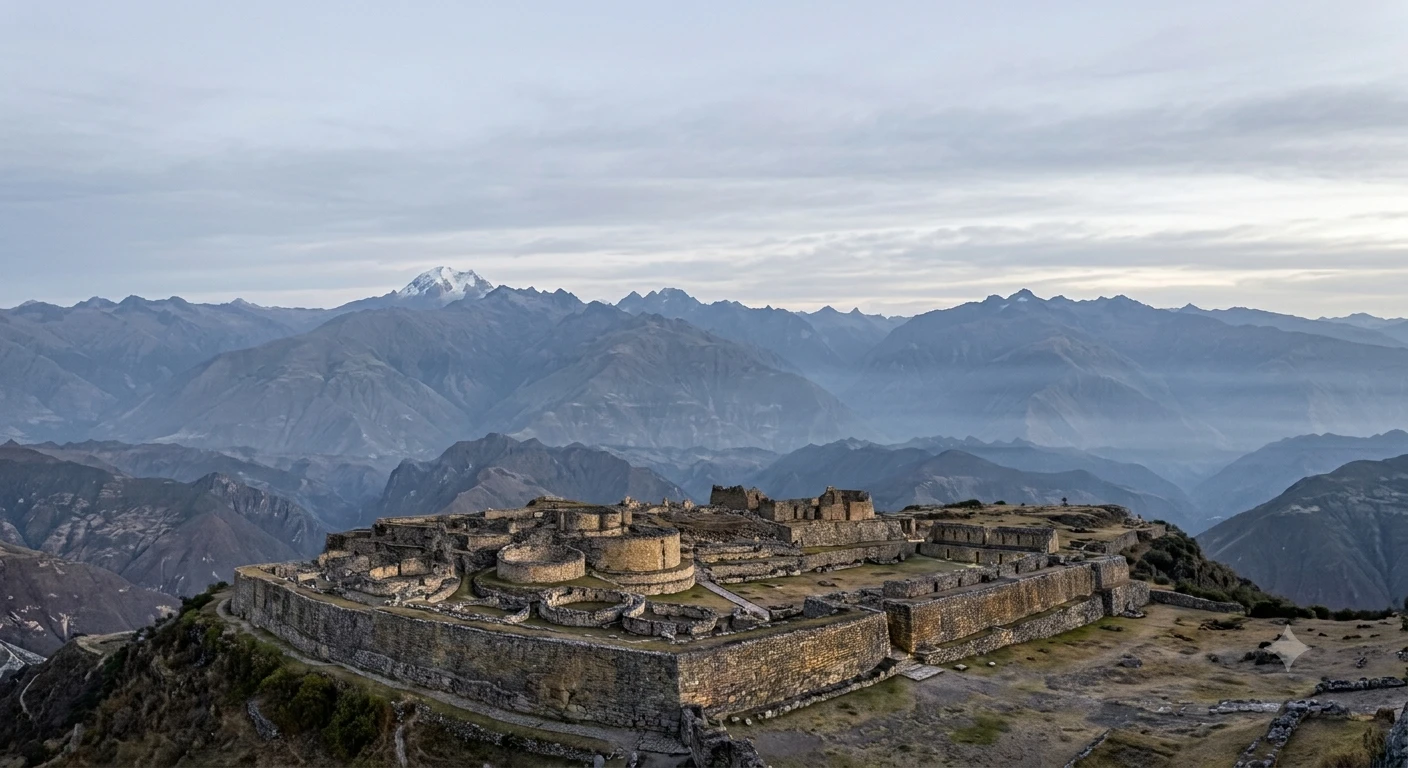
At Sacsayhuamán, Ollantaytambo and Puma Punku, stones weighing dozens — even scores — of tonnes are cut into interlocking polygonal forms and fitted so tightly a blade won't enter the joints. How they were quarried, moved and shaped remains one of archaeology's great open questions.
The Ancient Astronaut Question
Did visitors from the stars leave their mark?
Three Thousand Years
The cultures behind the enigmas
1200 BCE
Chavín de Huántar
Engineered acoustics and hidden galleries beneath a highland temple — the wellspring of Andean religion.
800 BCE – 100 CE
Paracas
Master weavers of the southern coast — and the elongated skulls that still divide scholars.
500 BCE – 500 CE
Nazca
The great desert geoglyphs, visible only from the sky.
300 – 1000 CE
Tiwanaku & Puma Punku
Andesite worked into H-blocks so precise they appear machined.
1200 – 1533 CE
The Inca
Sacsayhuamán and Ollantaytambo — on foundations that may be far older.